Friday, 28 August 2015

Key Tips and Advice for Barefoot Hoof Care from The Saddlery Shop!


Here at The Saddlery Shop, we are renowned as being barefoot hoofcare experts. Here are my key points, if you are considering taking your horse barefoot:
I believe there are very few equines that do not have the potential to lead sound, working lives without metal shoes. But ‘transitioning’, post de-shoeing, requires patience. When taking a horse barefoot, you are suddenly allowing the hoof to function at full capacity, with improved circulation and firing of nerves. This will in turn bring to light the true state of health in a newly de-shod hoof. When the shoes are initially removed, a horse with no major issues will usually be sound immediately at pasture, and will often be sound for at least short distances on a hard, flat surface, and only sore on stony surfaces; this horse could transition in just a few weeks. Whereas a horse with very flat soles; one that has been shod with excess ‘flare’ at the hoof wall; or an equine with metabolic challenges may take many more months to get to the same level of comfort. Hoof growth is a reactive process, stimulated by movement and wear, so the hooves need to be given time to respond to the increased requirements placed on them.
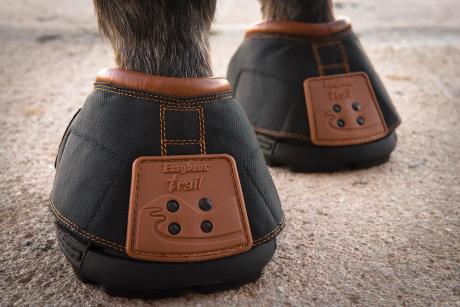
Afraid of excess wear? You can use hoof boots when protection is required; they also provide shock absorption on concussive surfaces. 
With a barefoot horse, you will see precisely how diet affects the feet, notably how quickly high-sugar grass or feeds can be detrimental to hoof health. Diet is key to successfully managing a horse without shoes. High-quality forage and relevant vitamins and minerals, such as those found in very high-specification feed balancers or supplements, are vitally important.
Choosing a good hoof care professional (whether trimmer or farrier) is key. LANTRA (the UK’s Sector Skills Council for land-based and environmental industries) coordinates the National Occupational Standard (NOS) for Equine Barefoot Care. There are a few different trimming associations in the UK, as well as some good, independent trimmers; and many farriers are becoming more experienced in the field of trimming for work and performance. Seek personal recommendation.
UK Contacts-
  • Association for the Advancement of Natural Horse Care Practices (AANHCP) - www.aanhcp.net (click on ‘get help’ tab, and European practitioners are provided)
  • Barefoot Horse - an independent information resource with a list of UK based barefoot trimmers and training providers - www.barefoothorse.info 
  • Equine Podiatry Association UK (EPAUK) - www.epauk.org
  • Institute of Applied Equine Podiatry (IAEP) - www.equinepodiatry.com (click on ‘care providers’ and European practitioners are provided)
  • UK Natural Hoof Care Practitioners - http://uknhcp.org.uk
Searching for a horse? Visit the classified ads site http://www.horsequest.co.uk to see a range of horses for sale.
Purchase ‘The Barefoot Horse’ book here - 

Friday, 21 August 2015

A Look at Popular Bits for all Disciplines; Read our Guide!


With the European Championships well underway, we look at some popular bits you may see in the different riding disciplines:
Popular bits for cross country 
This bit – also known as the Ringed Continental or Bubble Gag - is available with three or four cheek rings, in most of the commonly seen mouthpieces, and in several materials. It us often chosen by riders of horses that can be heavy in the hand, as it emulates the effect of draw reins; Dutch gags are best described as a cross between a traditional gag and a Pelham. They aim to help to keep the horse between hand and leg, and in a nicely rounded outline.
The Waterford is a type of mouthpiece consisting of a series of balls across the main part of the bit, designed to encourage the horse to ‘mouth’ the bit and encourage better perception of the rider's aids. It is recommended by many riders whose horses are sensitive, yet strong, and hang on the bit or go on the forehand. It is available with several cheek piece styles, including a hanging cheek. It is also popular as a Nelson Gag (with full cheeks), Balding Gag (with loose ring cheeks) and the Cheltenham Gag (with eggbutt cheeks). 
Popular bits for Dressage
This bit was developed in America and has a unique roller in the centre section. The roller provides gentle stimulation to the tongue, which encourages salivation, allowing the acceptance of the bit, therefore the relaxation of the jaw. The roller gives the horses a greater feeling of freedom with the tongue and is often chosen by riders of horses that have a tendency to put their tongue over the bit, or those that have a ‘busy’ mouth.
This bit by Sprenger is double jointed, and features a lozenge link; it is favoured by many dressage riders. It is made from the specialist material Aurigan, and is renowned to offer the rider a soft connection with the horse. Aurigan contains silicon and is nickle free, so it combines the oxidation advantages of copper with maximum strength and durability. The KK Ultra is said to encourage a soft, relaxed jaw, and quick acceptance of the bit and aids.
Popular bits for show jumping
Butterfly Flip
The Butterfly Flip features bit rings in a ‘D’ shape for multiple rein positions; it looks similar to a Kimblewick once in the mouth. The Butterfly Flip gives varying degrees of control, depending on the positioning. It is said to be ideal for horses with sensitive mouths that are still strong and inclined to lean on the bit in the exiting show jumping environment. It has a small amount of leverage. 
Wide Port Segundo
The Segundo has a leverage action and works on several of points of control on the horse's head, and also within the mouth. This bit is unusual in that it does not use tongue pressure, as it features a large port, through which the tongue lies. It is said to be good for horses that are strong in mouth, as the horse can’t lean on the bit or get their tongue over it; it is popular with very experienced riders. It is also good for horses with a narrow jaw, or those that find it difficult to lie their tongue down comfortably when a bit is in their mouth. 
The Saddlery Shop offers a wide range of bits suitable for all horses and ponies and every discipline. For free bitting advice, email advice@thesaddleryshop.co.uk.

Friday, 14 August 2015

Going Barefoot; A Guide from Barefoot Expert Lucy Nicholas

Going barefoot requires specific management and care; and as we know, some horses’ feet may be harder to maintain in good condition than others so making the transition from shoes to bare feet on a horse with less than perfect hooves may take time, patience and a little investment!
In order to keep your horse’s bare feet well maintained horse owners should consider the following three  main points:
  1. A good balanced diet containing all the essential vitamins and minerals that he needs.
  2. Regular trimming
  3. Regular exercise
How to choose hoof boots
Purchasing a set of hoof boots which provide adequate support and protection to the hoof when you are making the transition from shoes to bare foot – often known as ‘transitioning’ is crucial. There are very many brands and types of hoof boots available from The Saddlery Shop suitable for very small ponies right up to large heavy horses!
Sizing
Once you have chosen a suitable boot for your horse or pony, it needs to be correctly fitted according to the manufacturer’s instructions. There are a couple of points you should consider with regard to sizing:
  1. Does the boot go on easily?
  2. Does your horse’s hoof fill the inside of the boot in a snug fashion, without any bulging or gapping?
  3. Check that the fastenings are not too tight.
  4. You should not be able to twist the boot from side to side by anymore than 5 degrees (unless otherwise stated by the manufacturer), as this could indicate that the boot is too big or the wrong shape for your horse’s hoof.  Likewise, if you are finding it difficult to get the boot on, it could well be too small, so try the next size up.
  5. Rubbing:  if the boot is too small it will rub, making your horse’s foot very sore.  Check the measurements again and try the next size up to see if this fits any better.
To see a range of articles, videos and reviews concerning equestrian and countryside matters visit www.horseandcountryside.com

Friday, 7 August 2015

The Saddlery Shop Helps you ‘Shop for your Shape’ in our Guide!


In our latest blog The Saddlery Shop takes a look at shopping for your shape and optimising the opportunity to look good in the saddle! when competing. To read the full feature pick up a copy of Local Rider Magazine!
When competing, there’s no denying that if you look the part, you will feel more confident, and give a good impression.
Most women who have the finances to ride and compete are busy, working people, and many are mothers; this means that most of us are of average build, with the odd lump or bump here and there! However, there’s no reason why you can’t look the part and feel confident, whatever your size or shape.
There are generally considered to be four main types of female body shape: Apple shape (round), Pear shape (bottom heavy), Hourglass shape (curvy) and Rectangle shape (relatively straight up and down). It’s important you spend some time kindly critiquing yourself, before purchasing your outfit!
Apple shape – your friends say you have great legs, however you have some fullness around the middle that you may like to minimise. A fancy stock and ‘blingy’ pin will put more attention on your top half; go for high waisted, well cut beige breeches (ideally without a belt) to comfortably support your tummy – hunting breeches, such as Horseware Ladies Aylesbury Hunting Breeches, are ideal – and a jacket with obvious shoulder definition and sufficient length so that your tummy is not too exposed, like the Shires Ladies Cotswold Show Jacket. If your calves are wide, then choose made to measure boots or those in wide sizes, so they do not look too tight. Dublin’s ‘On Air Stretch Dress Boots’ feature a leather-look rear stretch panel on the calf, providing around 2cm of ‘stretch’.
Pear shape – you carry more weight on your hips or thighs but have a clearly defined waist that you can show off. Choose tailored jackets that make your shoulders look broader (velvet collars raise the eye line), and finish above the widest point of your hips and bottom – Shires’ Ladies Kingston Show Jacket is a good example. Blingy stock pins and bold stock patterns will draw the eye upwards, while you can rock a white pair of high waisted breeches like Hy Performance Competition Ladies Breeches, which have a Polymide, Cotton, and Lycra material blend.
Hourglass shape – the envy of many females, you have a well-balanced body shape with your shoulders and hips in line, a well-defined bust, and a nipped in waist. Choose stretchy, belted breeches, ideally in beige – Shires Ladies SaddleHugger Breeches are very nice, with a four-way stretch knitted fabric – and a jacket that flatters the female form; the Horseware ladies competition jacket would be a bold choice but it is softshell, and form fitting to show off your balanced shape. Show off your waist with a snazzy belt and remember to invest in a good sports bra, to add a smoother silhouette.
Rectangle shape – you have a moderately straight shoulder and ribcage line, and may be fairly petite in your clothes size; you may like to try to create the illusion of a waist and curves with a jacket that gently shapes the waist but does not ‘nip you in’ – we like the Horseware Embellished Ladies Show Jacket. Exaggerated pocket details, detailing at the hips and a fancy stock will help. (Avoid vertical pin stripes if you are choosing a tweed). You can wear hipster or low waisted breeches in a light colour including white – we like the Horseware Ladies Woven Competition Breeches.
 Top tips for all sizes from The Saddlery Shop
  1. Check your underwear for VPLs and consider seam free versions. Lace is a ‘no go’ as it creates bumps!
  2. Double rear Jacket vents are always flattering.
  3. Wear a good sports bra for comfort and a nice silhouette.
  4. Match your gloves and breeches, for a smart look.
  5. Choose machine washable fabrics – Polyester and cotton blends wash well.
  6. Consider your horse’s colouring when choosing your single coloured show jacket or subtly-patterned tweed jacket.
  7. Always wear a securely fastened ‘two point’ helmet meeting industry standards.
To find out more about the stunning show gear The Saddlery Shop has to offer, including the products mentioned visit the website at www.thesaddleryshop.co.uk 

Friday, 31 July 2015

Key pointers for going Bare by Lucy Nicholas, author of ‘The Barefoot Horse - an Introductory Guide to Barefoot & Booting’

fixedHeight-2.aspx

In our latest blog we take a look at the key points for taking your horse barefoot with barefoot expert Lucy Nicholas from The Saddlery Shop. Lucy's book The Barefoot Horse- an Introductory Guide to Barefoot and Booting packed full of information about barefoot hoof care can be purchased from The Saddlery Shop. Click here to view! 
Here are my key points, if you are considering this method of horsecare-
  1. I believe there are very few equines that do not have the potential to lead sound, working lives without metal shoes. But ‘transitioning’, post de-shoeing, requires patience. When taking a horse barefoot, you are suddenly allowing the hoof to function at full capacity, with improved circulation and firing of nerves. This will in turn bring to light the true state of health in a newly de-shod hoof. When the shoes are initially removed, a horse with no major issues will usually be sound immediately at pasture, and will often be sound for at least short distances on a hard, flat surface, and only sore on stony surfaces; this horse could transition in just a few weeks. Whereas a horse with very flat soles; one that has been shod with excess ‘flare’ at the hoof wall; or an equine with metabolic challenges may take many more months to get to the same level of comfort. Hoof growth is a reactive process, stimulated by movement and wear, so the hooves need to be given time to respond to the increased requirements placed on them.
  2. Afraid of excess wear? You can use hoof boots when protection is required; they also provide shock absorption on concussive surfaces.
  3. With a barefoot horse, you will see precisely how diet affects the feet, notably how quickly high-sugar grass or feeds can be detrimental to hoof health. Diet is key to successfully managing a horse without shoes. High-quality forage and relevant vitamins and minerals, such as those found in very high-specification feed balancers or supplements, are vitally important.
  4. Choosing a good hoof care professional (whether trimmer or farrier) is key. LANTRA (the UK’s Sector Skills Council for land-based and environmental industries) coordinates the National Occupational Standard (NOS) for Equine Barefoot Care. There are a few different trimming associations in the UK, as well as some good, independent trimmers; and many farriers are becoming more experienced in the field of trimming for work and performance. Seek personal recommendation! 
The Saddlery Shop offers a wide range of hoof boots from brands including Easycare, Old Mac, Renegade and much more! Visit the website today to find out more or make a hoof boot or barefoot enquiry which will be answered by Lucy Nicholas! 

Thursday, 23 July 2015

Kids clothing


High quality kids’ clothing is usually designed to offer warmth retention and also protect against overheating; it may also have waterproofing capabilities, as well as durability and comfort. Technical clothing may also dissipate perspiration, and offer adequate air permeability.

Look out for soft fabrics that won’t irritate gentle skin, and garments that have a good shape. For riders, the item must go with the body, and not restrict movement.

Here are some of our faves-

http://goo.gl/PUuDZU  - The Mark Todd Bally children's waistcoat - £4.99


http://goo.gl/TdfZd2  - The Sherwood Forest synthetic, Pararda long riding boots - leather look! - £39.99

http://goo.gl/6e8rkD  - The Equisafety Polite Air Road Safety Fluorescent Waistcoat - available in small sizes - just £22.49

Remember that you often get what you pay for – a low RRP item may have less shape stability or colour-fast properties. However, there are many bargains to be had, especially online at The Saddlery Shop, where good quality items are reduced in price. Happy Shopping!


Friday, 17 July 2015

Bridling the Sensitive Horse


This month's edition of Local Rider Magazine featured a bitting feature from our in-house expert Lucy Nicholas. If you are based in the South East read the full article by picking up a copy of the fab magazine today available from good equestrian retailers in the South East! 
Lucy says... 
"We recently helped a customer whose horse can be very fussy around the head, and doesn’t settle very well when being ridden. He doesn’t like his ears being touched and wasn’t very comfortable in his single jointed snaffle and conventional bridle; here’s what I advised, to help him settle."
Young and sensitive horses and ponies can often be reactive to the pressure created by the bridle or the bit, creating a common issue for horse owners. This sensitivity can be innate, a natural part of the horse’s personality, or it could have been created by previous owners or trainers. However, the initial thing to rule out is a physical problem.
Firstly for a query such as this, I would ask whether the horse has received sufficient equine dental treatment. The bridle and the bit place pressure on the tongue, the bars of the mouth and the poll, so the first thing I would want to rule out is a dental problem! If you have a sensitive horse that hasn’t had his wolf teeth removed, this issue could may be the culprit, as the bit can interfere with the wolf teeth, causing pain. Ask a qualified vet or equine dental technician dentist to come and assess your horse’s teeth if you haven’t done so already, and keep up regular assessments and treatment to rasp any sharp teeth or hooks, and assess for unhealthy tooth matter. 
The Micklem
Providing that all bases are covered in terms of dental care for sensitive horses, and that there are no further veterinary complications such as ear mites or pain in the poll region, in terms of a bridle, I like the Micklem.
The Micklem has been specifically designed for those horses that don’t conform well to regular tack. Designed by trainer William Micklem, the innovation is based on increasing comfort in a range of different avenues, as it is designed from the inside out, following the shape of the skull itself instead of the outward appearance of the head.
In particular, the Rambo Micklem Multi-Bridle avoids pressure on the facial nerves, the projecting cheek bones and the upper jaw molar teeth. This prevents the potential pressure put on facial nerves and the sensitive tissues lining the cheeks inside the mouth by tight fitting cavesson or flash nosebands. 
The Rambo Micklem provides a great solution for the many horses that resist because of pain around the bars of the mouth, hate significant pressure on the tongue and as a result fight the contact or get their tongue over the bit. The headpiece of the Micklem has been widened and padded to reduce pressure and is ideal for a horse that is difficult to settle, particularly if changing the bit has not worked.
Myler Comfort Snaffle
In terms of bitting, I also suggested a Myler Comfort Snaffle. There are various versions available. These bits do not pinch like conventional bits can, and wrap around without the conventional nutcracker action, allowing independent side movement. Many of the mouthpieces in the range limit poll pressure, ideal for a sensitive horses, or those with a large or fleshy tongue. Ask an expert which version would suit your horse - if your horse likes a loose ring style, the Loose Ring Myler is also very nice, and has a sweet iron mouthpiece and copper inserts.
NOTE: Because we rarely encounter problems with our horses' ears, we often take them for granted. However, discomfort, headshaking or resistance to the bridle can in some instances be caused by ear mites. These cankerous little parasites are small insects, white in colour, and less than 1mm in size, so are only just visible to the naked eye! Ear mites can produce a waxy plug in the ear canal, reducing hearing and irritation. If ear mites are bothering your horse, the vet may need to use sedation in order to examine the deep ear canal, and recommend relevant medication and treatment! 
To find out more about the Rambo Micklem Bridle and the Myler Loose Ring or Comfort Snaffle available from The Saddlery Shop or if you have a question visit the website www.thesaddleryshop.co.uk or contact our team via the website or on Tel: 0344 880 6900